
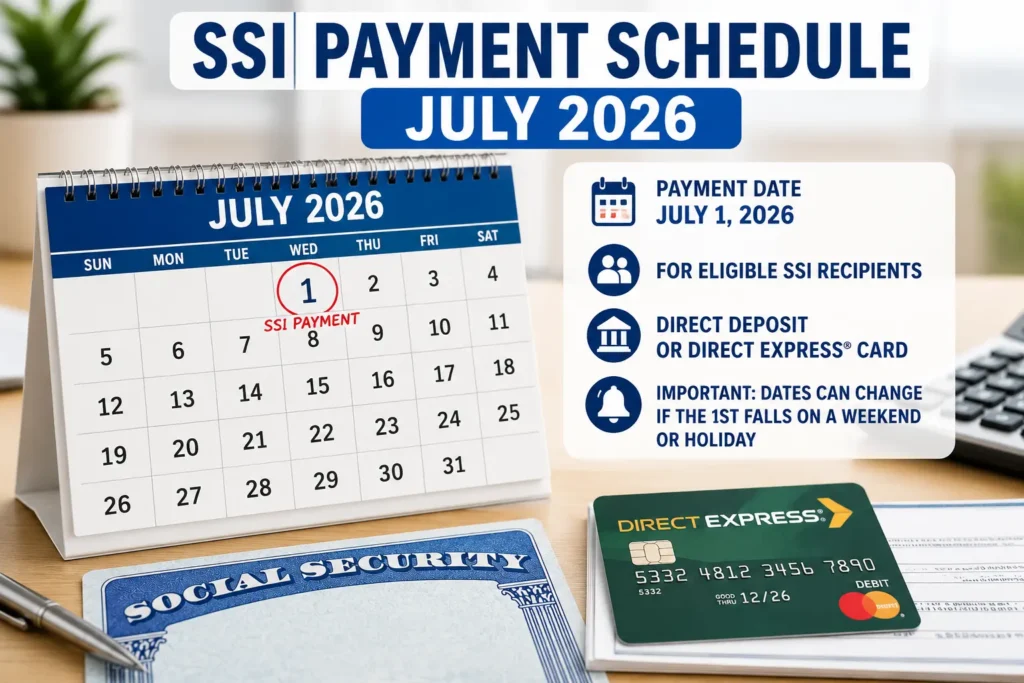
Millions of Americans depend on Supplemental Security Income (SSI) benefits every month to help cover essential living expenses such as housing, food, utilities, and healthcare costs. As July 2026 approaches, beneficiaries are looking for accurate information regarding the SSI Payment Schedule July 2026, expected payment dates, eligibility requirements, and any important updates from the Social Security Administration (SSA).
Understanding when your SSI payment will arrive is important for budgeting and financial planning. Since SSI benefits are typically paid on the first day of each month, recipients often rely on these payments to manage household expenses and maintain financial stability.
In this comprehensive guide, we will explain the SSI Payment Schedule July 2026, who qualifies for SSI benefits, expected payment dates, direct deposit information, benefit amounts, and important details beneficiaries should know.
What Is Supplemental Security Income (SSI)?
Supplemental Security Income (SSI) is a federal assistance program administered by the Social Security Administration (SSA). The program provides monthly financial assistance to individuals with limited income and resources.
SSI benefits are available to:
- Adults age 65 or older
- Blind individuals
- Disabled adults
- Disabled children
- Individuals with limited financial resources
Unlike Social Security retirement benefits, SSI is based on financial need rather than work history.
The goal of the program is to help eligible individuals meet basic living expenses and improve financial security.
SSI Payment Schedule July 2026
According to the standard Social Security Administration payment schedule, SSI benefits are generally paid on the first day of each month.
Expected SSI Payment Date for July 2026
July 1, 2026 (Wednesday)
Since July 1, 2026 falls on a regular business day, beneficiaries are expected to receive their SSI payments on schedule.
Recipients who use direct deposit may see funds appear in their bank accounts early in the morning on the payment date.
Individuals receiving payments through Direct Express cards should also receive their deposits on the same date.
Why Payment Dates Sometimes Change
There are situations when SSI payment dates may be adjusted.
Payment dates can change when:
- The first day of the month falls on a Saturday
- The first day falls on a Sunday
- The first day falls on a federal holiday
When this happens, the Social Security Administration typically issues payments on the previous business day.
This policy helps ensure recipients receive benefits without unnecessary delays.
Who Qualifies for SSI Benefits?
To qualify for SSI benefits, applicants must meet certain eligibility requirements established by the Social Security Administration.
Age Requirement
Individuals aged 65 or older may qualify based on financial need.
Disability Requirement
Adults and children with qualifying disabilities may be eligible for benefits.
The disability must significantly limit daily activities and be expected to last at least 12 months or result in death.
Income Limits
SSI is designed for individuals with limited income.
Income considered by SSA may include:
- Wages
- Self-employment income
- Social Security benefits
- Pensions
- Certain gifts and support payments
Resource Limits
Applicants must also meet resource limits.
Generally:
- Individual limit: $2,000
- Couple limit: $3,000
Certain resources such as a primary residence and one vehicle may not count toward these limits.
Maximum SSI Benefit Amounts for 2026
SSI payment amounts can vary depending on income, living arrangements, and state supplements.
Estimated federal benefit rates for 2026 may include:
- Individual recipient: Up to approximately $967 per month
- Eligible couple: Up to approximately $1,450 per month
Actual payment amounts may differ based on individual circumstances.
Some states also provide additional SSI supplements, increasing monthly benefits.
State Supplemental Payments
Several states provide additional financial assistance to SSI recipients.
State supplemental payments may help beneficiaries cover:
- Housing expenses
- Utility costs
- Medical needs
- Personal care services
The amount varies depending on the state and recipient circumstances.
Beneficiaries should check local state assistance programs for additional support opportunities.
Direct Deposit and SSI Benefits
The Social Security Administration strongly encourages beneficiaries to use direct deposit.
Advantages of Direct Deposit
- Faster access to funds
- Improved security
- Reduced risk of lost checks
- Convenient banking access
- Reliable payment delivery
Most beneficiaries receive payments electronically through direct deposit or Direct Express debit cards.
Direct Express Card Benefits
Recipients without traditional bank accounts may use the Direct Express card program.
Benefits include:
- No need for a bank account
- Secure electronic deposits
- ATM access
- Online account management
- Convenient purchases
Many SSI recipients choose Direct Express because of its simplicity and reliability.
What To Do If Your SSI Payment Is Late
Although most payments arrive on time, delays can occasionally occur.
If your payment is missing:
Step 1: Wait Three Business Days
The Social Security Administration recommends waiting three mailing days before reporting a missing payment.
Step 2: Check Your Bank Account
Review recent transactions and pending deposits.
Step 3: Contact Your Financial Institution
Some banks process deposits at different times.
Step 4: Contact the SSA
If the payment is still missing, contact Social Security for assistance.
Representatives can review your account and determine whether additional action is needed.
Common Reasons for Payment Delays
Several factors can affect payment timing.
Common reasons include:
- Banking system delays
- Incorrect account information
- Federal holidays
- Processing errors
- Changes in eligibility status
- Identity verification issues
Most problems can be resolved quickly once identified.
Reporting Changes to SSA
SSI recipients must report certain changes promptly.
Examples include:
- Change of address
- Marriage or divorce
- Employment changes
- Income increases
- Resource increases
- Living arrangement changes
Failure to report changes could result in overpayments or benefit reductions.
Keeping records current helps avoid complications.
How SSI Differs From SSDI
Many people confuse SSI and SSDI.
SSI
- Need-based program
- No work history required
- Limited income and resources required
SSDI
- Based on work credits
- Requires employment history
- Not based on financial need
Some individuals may qualify for both programs under certain circumstances.
Cost-of-Living Adjustments (COLA)
SSI benefits may increase annually through Cost-of-Living Adjustments (COLA).
COLA increases help beneficiaries keep up with rising living expenses caused by inflation.
The annual adjustment is typically announced later in the year.
Millions of SSI recipients closely monitor COLA announcements because even small increases can significantly affect household budgets.
Budgeting Around Your SSI Payment
Careful budgeting can help recipients maximize monthly benefits.
Consider prioritizing:
- Housing expenses
- Utility bills
- Food purchases
- Prescription medications
- Transportation costs
Creating a monthly budget can reduce financial stress and improve stability.
Many recipients also establish emergency savings when possible.
Additional Benefits Available to SSI Recipients
SSI recipients may qualify for other assistance programs.
Examples include:
- Medicaid
- SNAP food assistance
- Housing assistance
- Energy assistance programs
- Transportation assistance
- Prescription drug programs
Combining available programs can significantly improve overall financial well-being.
Important July 2026 Reminders
Beneficiaries should remember:
- Expected SSI payment date: July 1, 2026
- Keep banking information updated
- Report changes promptly
- Monitor account activity
- Beware of scams and fraudulent calls
- Use official SSA resources for information
Staying informed helps prevent payment interruptions and protects benefits.
Final Thoughts
The SSI Payment Schedule July 2026 remains an important topic for millions of Americans who rely on Supplemental Security Income benefits each month. Based on the current schedule, recipients are expected to receive their July SSI payment on July 1, 2026.
Understanding eligibility requirements, payment procedures, direct deposit options, and reporting responsibilities can help beneficiaries manage their finances effectively and avoid unnecessary delays.
As always, recipients should keep personal information updated with the Social Security Administration and monitor official announcements for future changes affecting SSI benefits.
For many households, SSI remains a critical source of monthly income, helping individuals maintain independence and meet essential living expenses throughout the year.